
Recent posts
Categories
- Adjoint Modeling (6)
- Atmospheric Modeling (11)
- Biogeochemical Modeling (13)
- Climate modeling (20)
- Coupled Modeling (14)
- Lake Modeling (1)
- Model development (8)
- Model-data assimilation (19)
- Ocean modeling (83)
- Offline Modeling (9)
- Planetary Atmospheres (6)
- Sea-ice Modeling (11)
- Uncategorized (18)
 New insights using the Oceananigans.jl modeling framework.
 This month, a taste of papers using MITgcm at this year’s Ocean Sciences Meeting.
 Happy 2026: Another new year, yet another new research roundup! Best wishes as always to MITgcmers past, MITgcmers present and MITgcmers yet to come…
 MITgcm sheds light on climate–vegetation–fire feedbacks in the early Triassic.
 Researchers use MITgcm to explore the response of Prochlorococcus to changes in the marine environment.
 Researchers use MITgcm to simulate 3D cloud dynamics on WASP-80b, revealing how atmospheric feedback shapes the planet’s spectra.
 Researchers use MITgcm to help improve seasonal US Gulf and East Coast sea level forecasts.
 MITgcm helps uncover link between glacier melt and coastal productivity in Greenland.
 Research using MITgcm reveals surprising shifts in Atlantic Ocean circulation under sudden climate forcing.
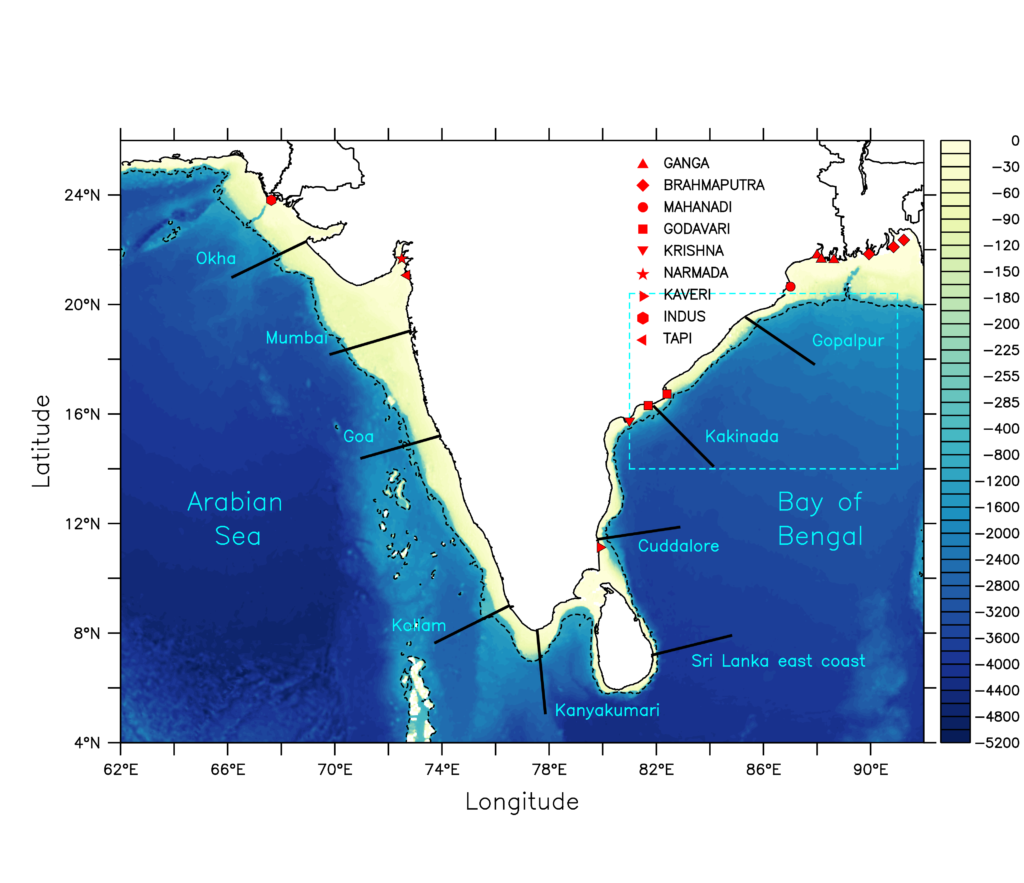 High-resolution modeling reveals how monsoons, eddies, and equatorial forces shape the movement of water, heat, and freshwater—critical for climate and coastal forecasting.