
Ecological Control of Subtropical Nutrient Concentrations
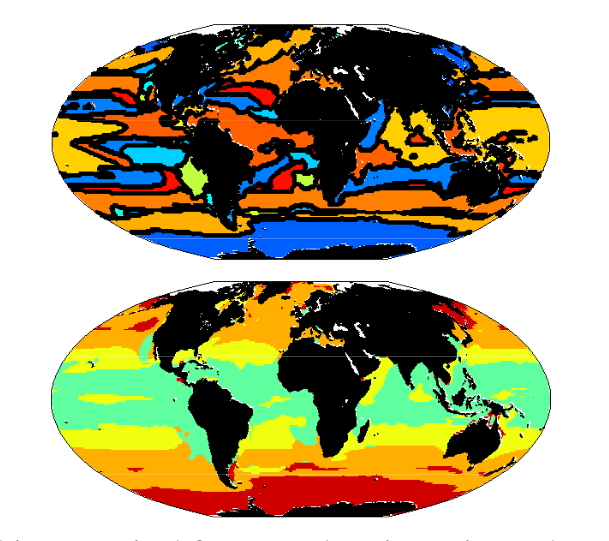
In this article we spotlight recent work by Darwin Project team members Stephanie Dutkiewicz, Mick Follows and Jason Bragg, who have been examining the utility of resource control theory to interpret the relationships between organisms and resources in a global coupled physical-biogeochemistry-ecosystem model built around MITgcm…
2009 research roundup
To round off the year we have collected a sample of 2009 research articles that involved MITgcm in some way. Lots of interesting work ranging from gas-giant planets to laboratory scale rotating fluid tanks. Take a look…
Overturning Sensitivity in an Eddying Ocean Model
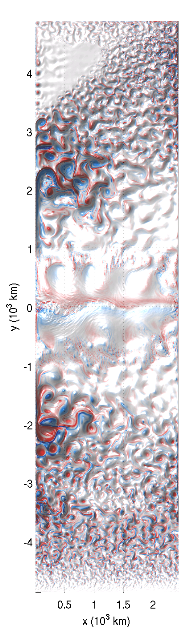
Work by Christopher Wolfe and Paola Cessi at UCSD, in which they investigate the equilibrium response of an eddy-resolving version of MITgcm to variations in the external parameters of diffusivity, wind forcing and geometry, with particular attention to the meridional overturning circulation (MOC) and deep stratification…
Planet-in-a-Bottle
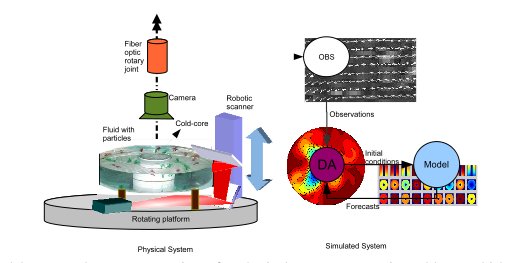
Work by Sai Ravela, John Marshall, Chris Hill, Andrew Wong and Scott Stransky in which they use MITgcm to provide the virtual analogue for a fluid lab experiment in the physical laboratory. This is part of an effort to demonstrate how to achieve real-time model-data synthesis, using measurements from a roboticaly controlled automated sensor system…
Lake Modeling
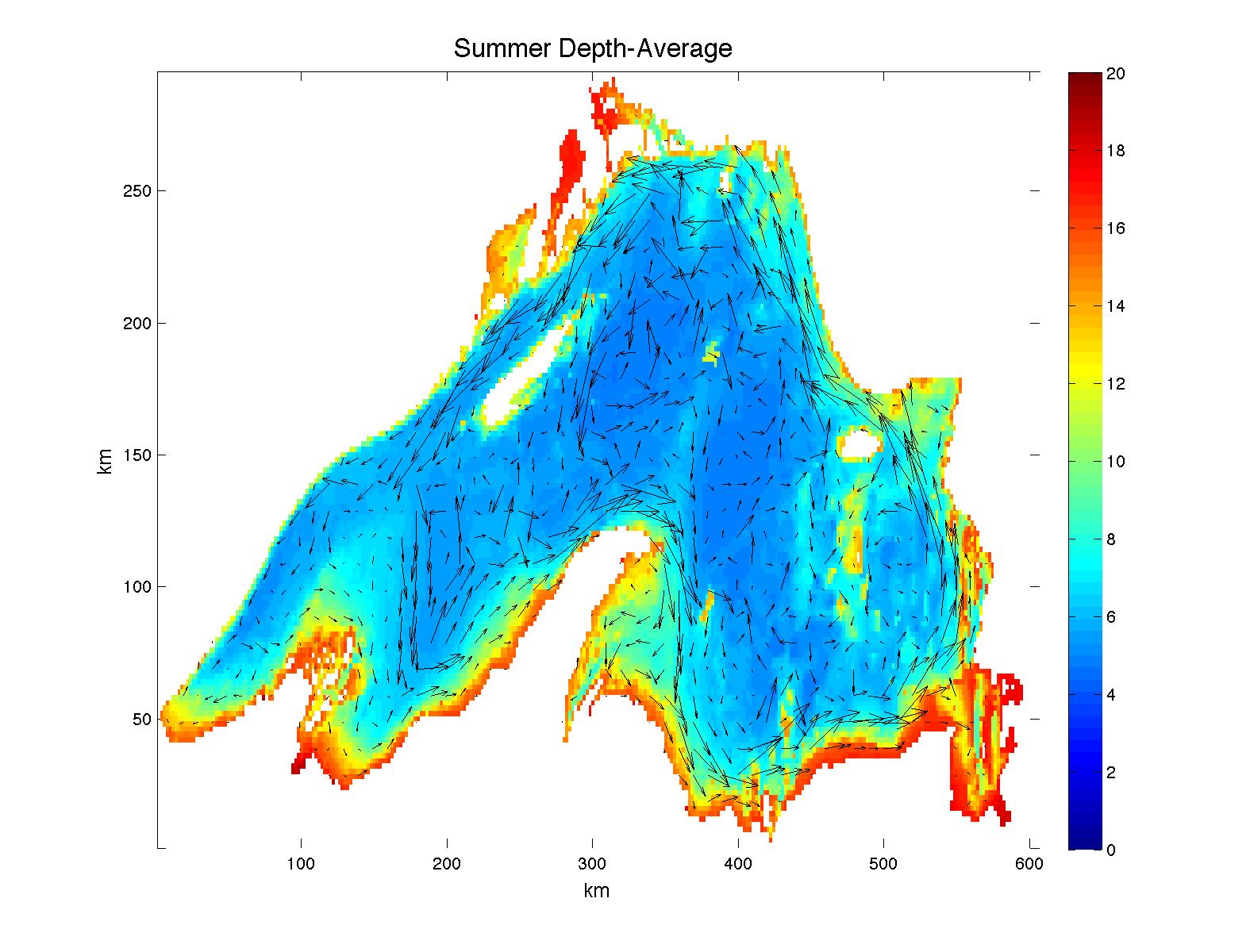
Work by Galen McKinley and Val Bennington at the University of Wisconsin, Madison using MITgcm to model the general circulation of Lake Superior as part of a project to develop a quantitative understanding of the role such bodies of water may play in the terrestrial carbon cycle…
Tidal Mixing Over Rough Topography
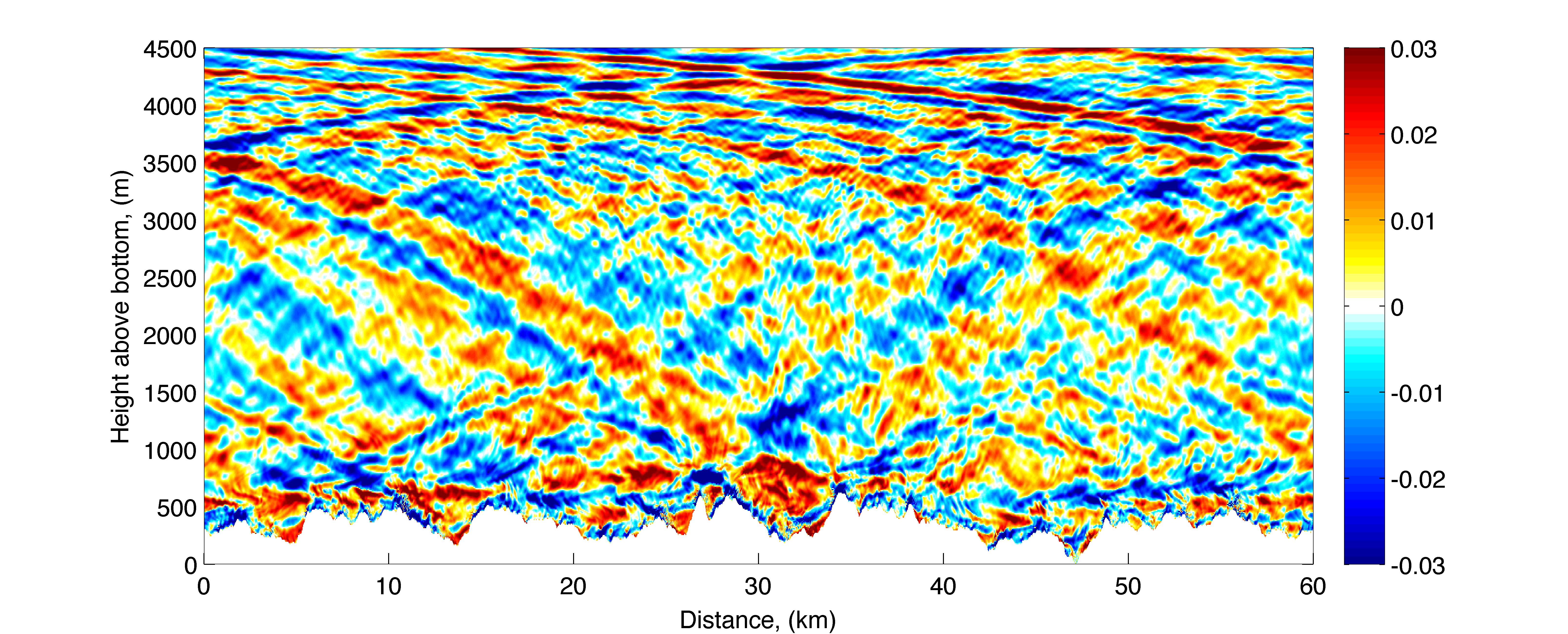 Work by Maxim Nikurshin and Sonya Legg at GFDL using a 2d version of MITgcm to explore radiation and dissipation of the internal tides generated through tidal mixing over rough topography…
Ocean Ecosystems
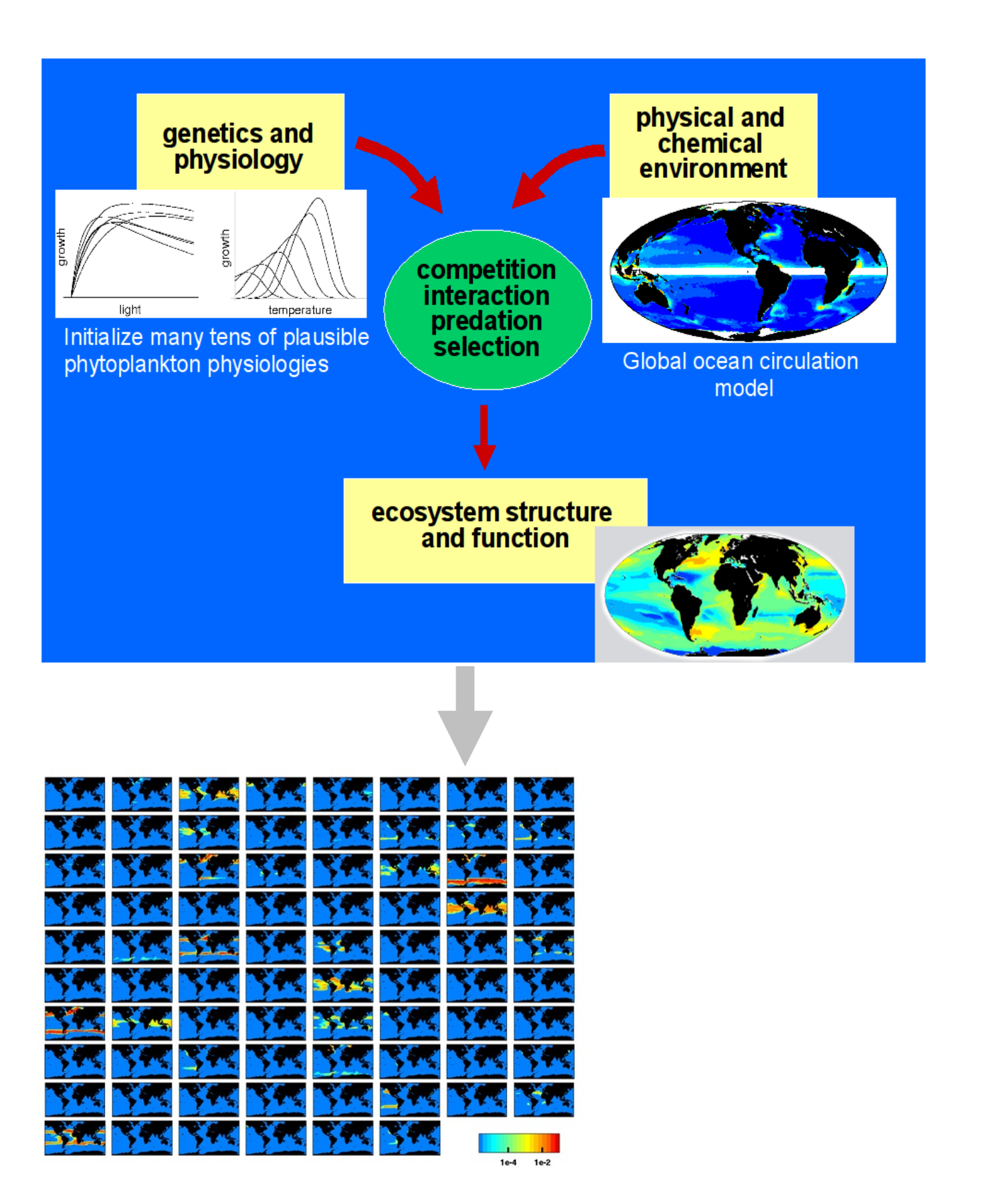 Work by Fanny Monteiro with Mick Follows and Stephanie Dutkiewicz at MIT who have been using the MITgcm to probe the behaviour of self-assembling phytoplankton communities within a global ocean circulation…
ConGRADulations!
Congratulations to MITgcm’s two newest doctoral graduates:Fanny Monteiro and Maxim Nikurashin.
Sea Ice
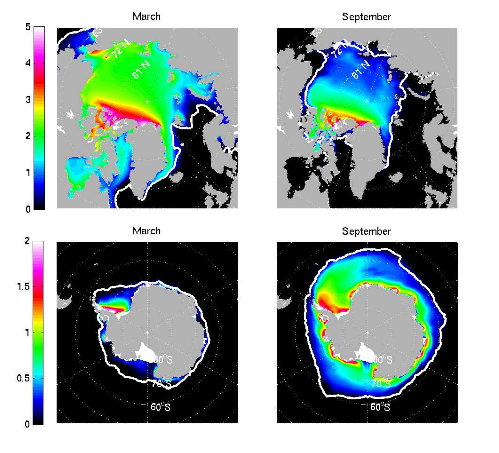 Work by Martin Losch of the Alfred-Wegener-Institute, Bremerhaven, Germany, Jean Michel Campin, Patrick Heimbach, Chris Hill (at MIT) and Dimitris Menemenlis (JPL) extending the reach of the MITgcm in to the Polar oceans, with the development of a dynamic-thermodynamic sea-ice model and its adjoint…
PRM
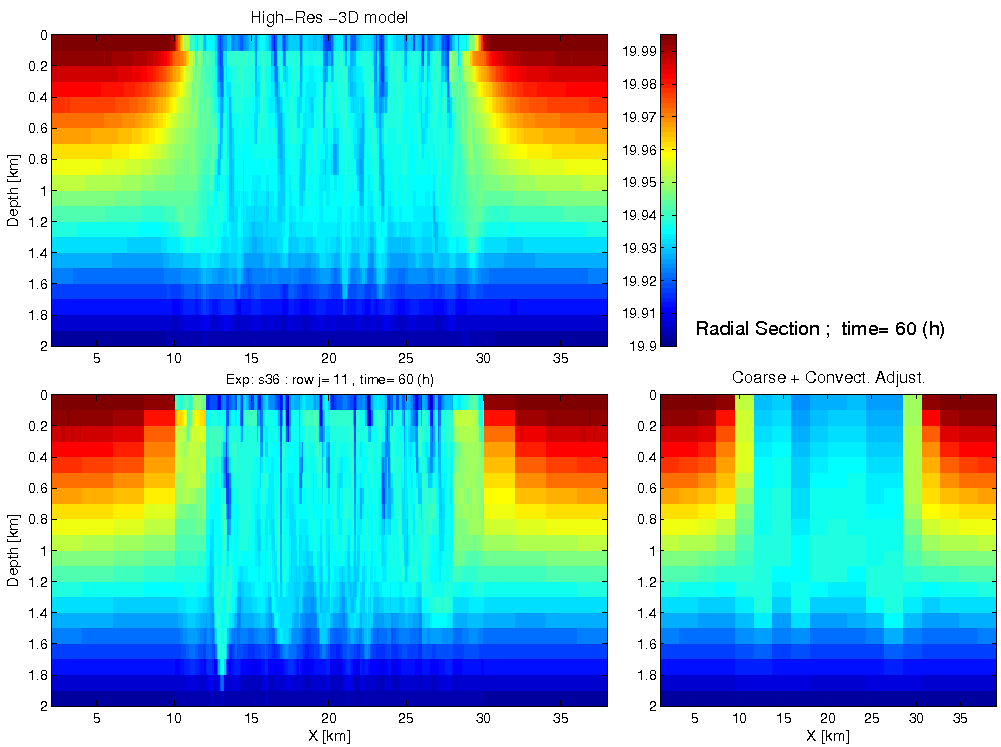 Work by Jean-Michel Campin, Chris Hill, Helen Jones and John Marshall at MIT using the MITgcm to exploit a multi scale superparameterization approach to increase efficiency in modeling oceanic deep convection (ODC)…