
Modeling Internal Solitary Waves, MITgcm.eu
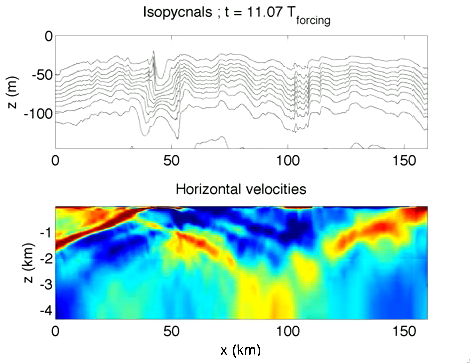 This month we look at work by Nicolas Grisouard and Chantal Staquet of the Laboratoire des Ecoulements Geophysiques et Industriels, Grenoble, France, who have been using MITgcm to model internal solitary waves (ISWs) of a kind observed in the Bay of Biscay.
Climate Determinism Revisited
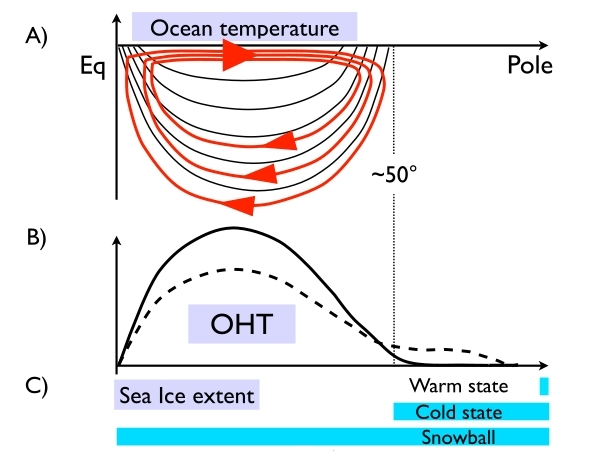 In a first for models simulating the 3d dynamics of both ocean and atmosphere, the MITgcm climate model has been found to exhibit three different stable states for exactly the same set of parameters and external forcings, suggesting that climates may exhibit multiple equilibria even in the presence of a vigorous internal variability sustained by weather systems and ocean-atmosphere-sea ice interactions…
Modeling Nordic Seas
 This month we look at work by Tom Haine, Professor of Physical Oceanography at Johns Hopkins University who is using MITgcm to model high-frequency fluctuations in the flow through the Denmark Strait…
Ocean Circulation and Atlantic Decadal Variability
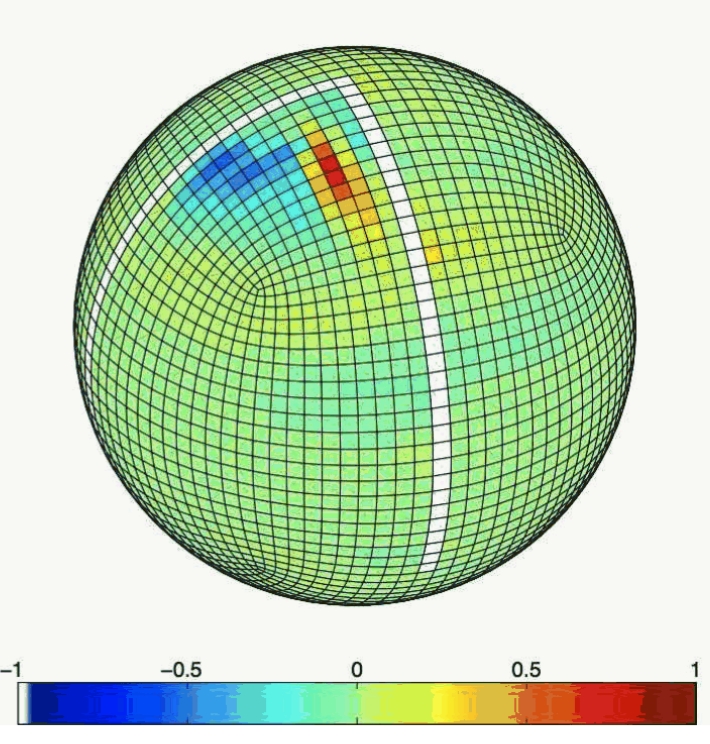 This month we look at work by Martha Buckley, David Ferreira, Jean-Michel Campin, Ross Tulloch and John Marshall, who have been using MITgcm to explore what role ocean circulation may play in Atlantic decadal variability. Asking the question: What is the role of the ocean circulation in Atlantic decadal SST variability, Buckley and co-workers use MITgcm to analyse the behavior of thermal anomalies within the framework of an idealised GCM.
OCCA
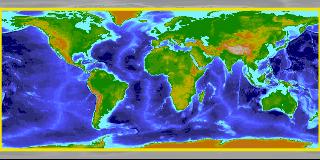 This month we focus on work by Gael Forget and the ECCO team who have been using MITgcm to construct a new ocean atlas. By using MITgcm as a means of optimally synthesising data within the framework of a physically accurate general circulation model, OCCA (short for OCean Comprehensible Atlas) provides a singularly accurate 3-year “snap-shot” of the global ocean state for the period December 2003 to November 2006…
Anthropogenic CO2 transport in the Southern Ocean.
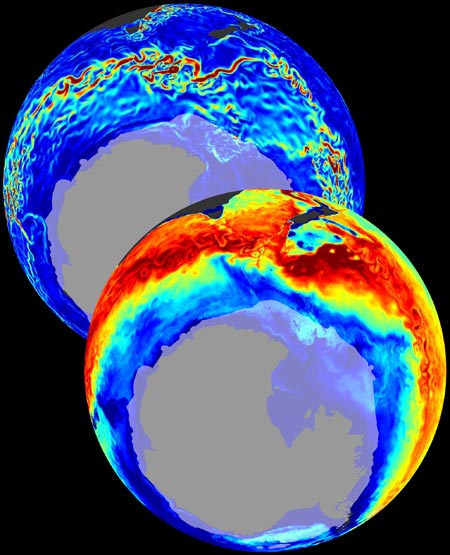 Taka Ito, Molly Woloszyn and Matt Mazloff have been studying anthropogenic CO2 transport in the Southern Ocean. Using MITgcm’s adjoint and offline capabilities, the team find a clear correlation between the pattern of carbon uptake and oceanic vertical exchange in strong support of wind-driven primary regulation of Southern Ocean ACO2 transport…
Ecological Control of Subtropical Nutrient Concentrations
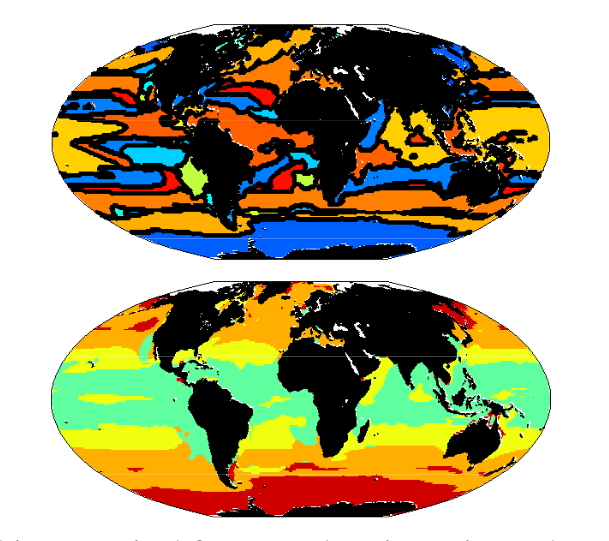
In this article we spotlight recent work by Darwin Project team members Stephanie Dutkiewicz, Mick Follows and Jason Bragg, who have been examining the utility of resource control theory to interpret the relationships between organisms and resources in a global coupled physical-biogeochemistry-ecosystem model built around MITgcm…
Planet-in-a-Bottle
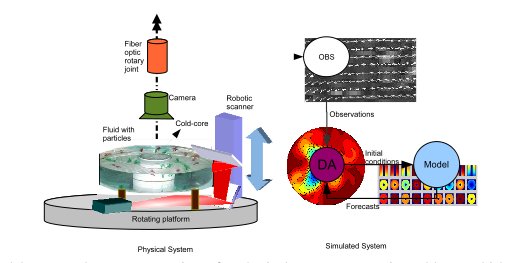
Work by Sai Ravela, John Marshall, Chris Hill, Andrew Wong and Scott Stransky in which they use MITgcm to provide the virtual analogue for a fluid lab experiment in the physical laboratory. This is part of an effort to demonstrate how to achieve real-time model-data synthesis, using measurements from a roboticaly controlled automated sensor system…
Tidal Mixing Over Rough Topography
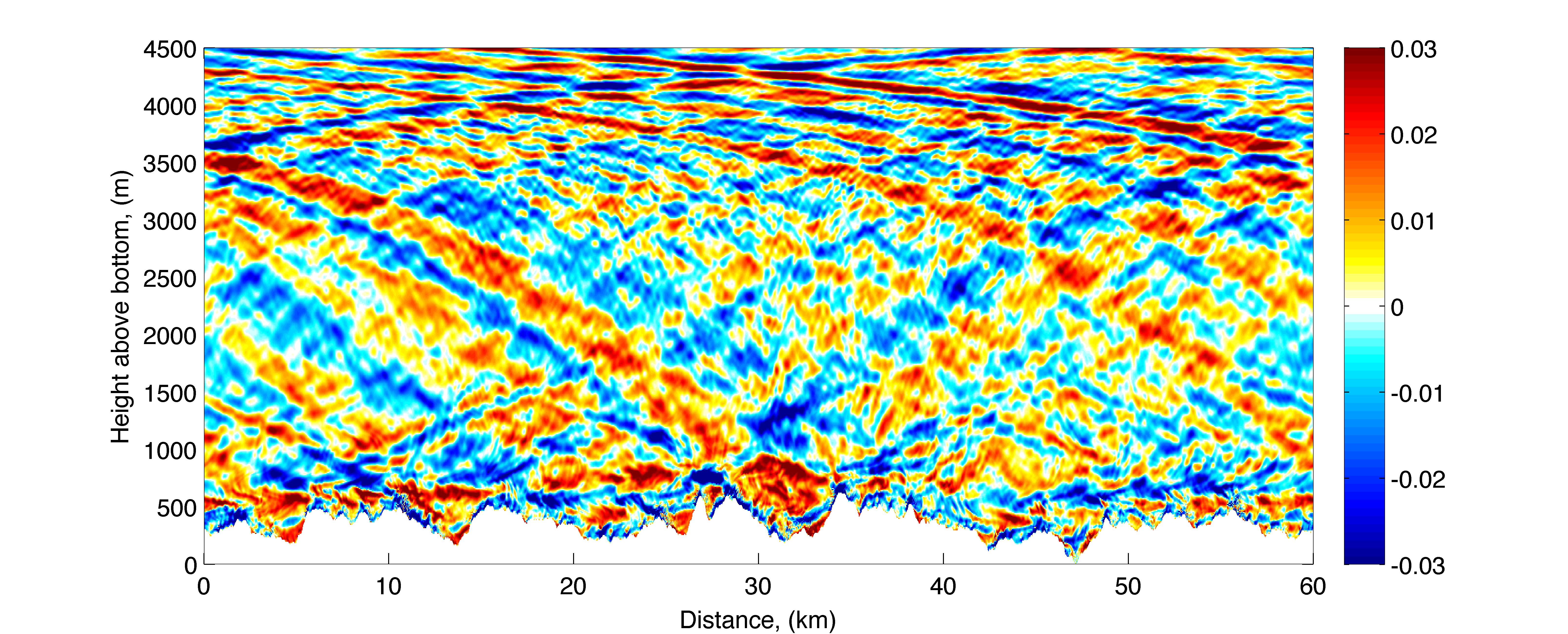 Work by Maxim Nikurshin and Sonya Legg at GFDL using a 2d version of MITgcm to explore radiation and dissipation of the internal tides generated through tidal mixing over rough topography…