
Wind Stress and Southern Ocean Meridional Overturning
 Ryan Abernathey and co-workers have been using idealised MITgcm simulations to explore the dependence of Southern Ocean meridional overturning on wind stress.
A Slippery Problem
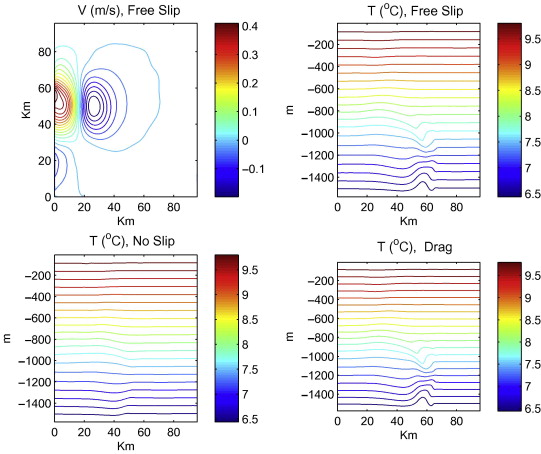 Deremble and co-authors have been using MITgcm to revisit the problem of no-slip boundary conditions in ocean models.
北极海冰数值预报的初步研究!!!MITgcm基于海冰!海洋耦合模式!”# $
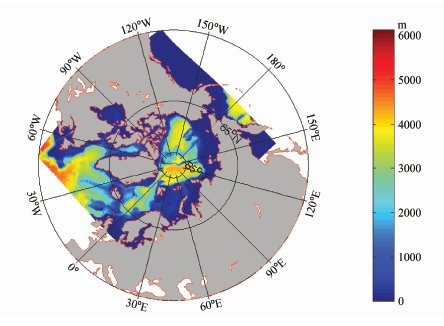 This month we shine light on recently published work by a team of Chinese investigators who have been using MITgcm to study Arctic sea ice.
Modeling Nordic Seas II
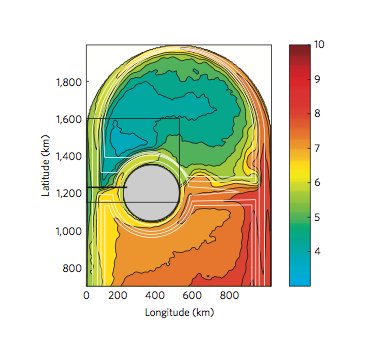 Mike Spall, a Senior Scientist in the Physical Oceanography Group at the Woods Hole Oceanographic Institution, has been using MITgcm to understand newly observed characteristics of the Denmark Strait Overflow.
Baroclinic Instability in the Ocean
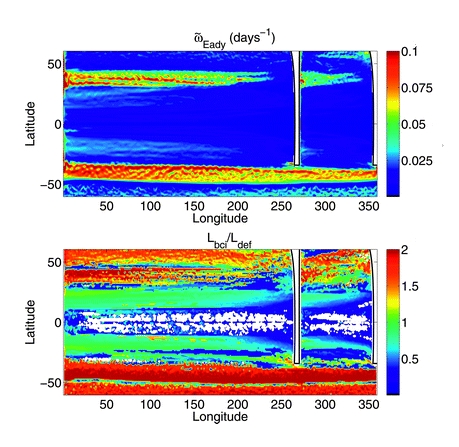 In a new JPO paper, Ross Tulloch, John Marshall, Chris Hill and Shafer Smith report on an observational, modeling and theoretical study of the scales, growth rates and spectral fluxes of baroclinic instability in the ocean, permitting a discussion of the relation between the instability scale, the first baroclinic deformation scale (R1) and the equilibrated eddy scale.
Mixing it up…
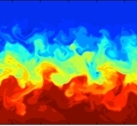 Malte Jansen is a third year graduate student in PAOC at MIT. He has been using MITgcm in an idealized study to explore how mixing by eddies may influence the equilibrium state of the extra-tropical atmosphere and the Southern Ocean and in particular why the two regimes exhibit such a different equilibrium state.
Arctic Carbon Cycle Modeling
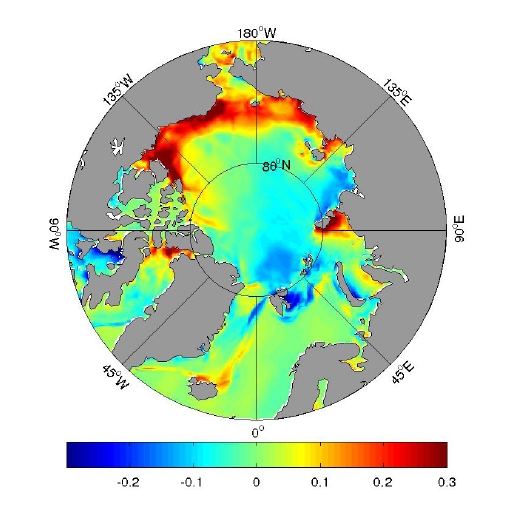 Motivated by observations indicating rapidly falling annual sea-ice minima, Manfredi Manizza and co-workers have been using an Arctic configuration of MITgcm to explore the Arctic Ocean Carbon Cycle.
Modeling the Ocean Response to Hurricanes
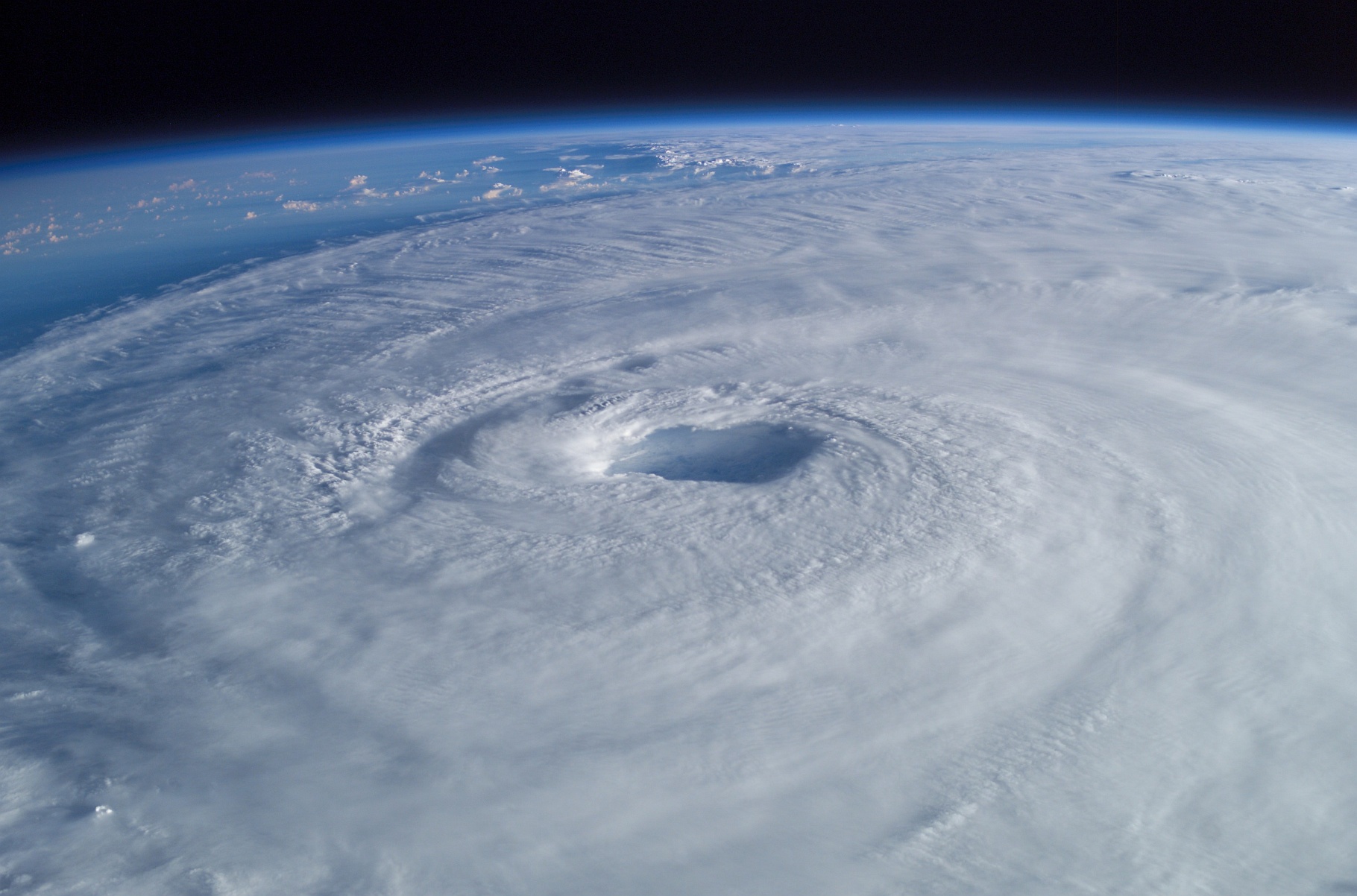 Familiar as we are with satellite images of hurricanes, the impact of these powerful storms on the upper ocean is markedly less visible. Dr Sarah Zedler (Texas A&M University) has been using MITgcm to help understand the features that appear in oceanic field data as a result of hurricane passage above.
Visualizing Earth Science Data
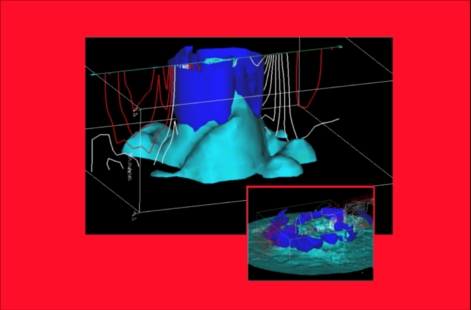 How would you explain the large scale pattern of weather fronts to a general audience? Roman Kowch, an undergraduate major in EAPS, has been exploring one way; as part of a UROP project with Lodovica Illari, Chris Hill and Constantinos Evangelinos.
Adjoint approaches to assessing local vulnerability to buoyant surface plumes
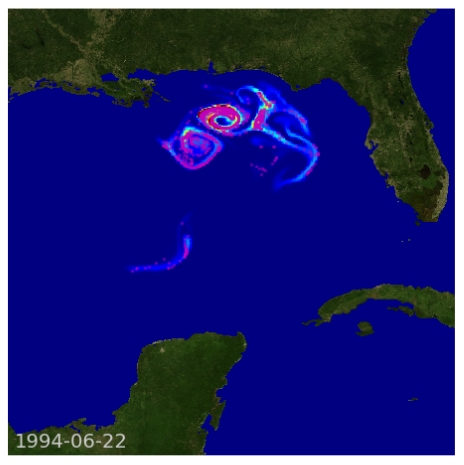 Prompted by the recent spill in the Gulf of Mexico, Ross Tulloch, Chris Hill and Oliver Jahn have been using MITgcm to compute the vulnerability of individual locations to remote buoyant surface plumes.