
MITgcm on the Beach
 At this time of the year newspapers and magazines abound with suggestions for things to read on vacation. MITgcm recommends popping copies of the following recent papers in your beach bag, after all, there’s more than one way to study the ocean!
Ocean Biology Meets Physics
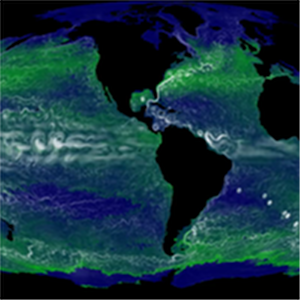 In this video, Mick Follows describes his group’s work using MITgcm and ECCO2 products to better understand the global carbon cycle and plankton populations.
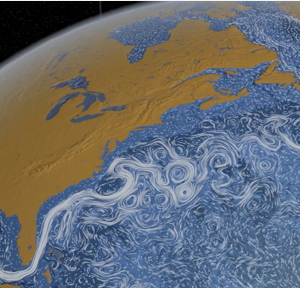
Under the Ice
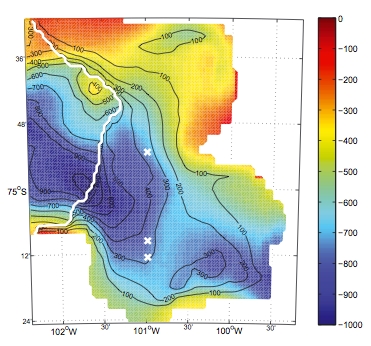 In a new paper published in the Annals of Glaciology, long-time MITgcm users Patrick Heimbach and Martic Losch investigate the sensitivity of sub-ice-shelf melt rates under the Pine Island Ice Shelf, West Antarctica, to changes in the oceanic state.
Modeling the Gulf of Aqaba (Gulf of Eilat)
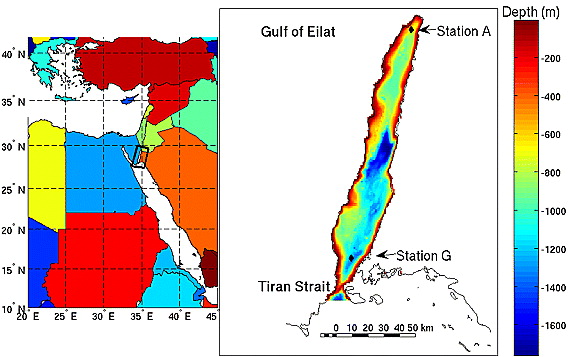 Long-time MITgcm-ers Eli Biton and Hezi Gildor have been using the model to explore the circulation in the Gulf of Aqaba (Gulf of Eilat), a terminal elongated basin that exchanges water with the northern Red Sea
2011 Research Roundup
 To round off the year we have collected a sample of 2011 research articles that involved MITgcm in some way. Take a look…
Wind Stress and Southern Ocean Meridional Overturning
 Ryan Abernathey and co-workers have been using idealised MITgcm simulations to explore the dependence of Southern Ocean meridional overturning on wind stress.
A Slippery Problem
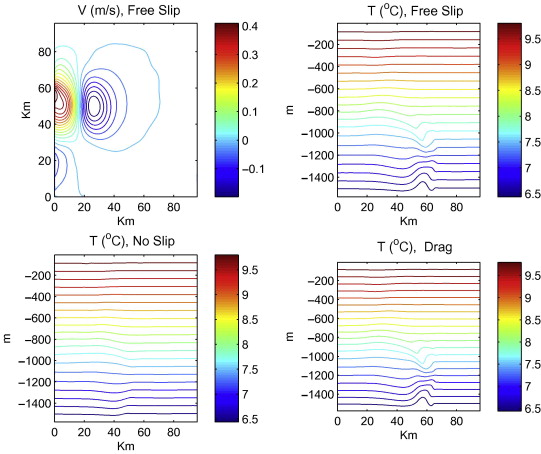 Deremble and co-authors have been using MITgcm to revisit the problem of no-slip boundary conditions in ocean models.
北极海冰数值预报的初步研究!!!MITgcm基于海冰!海洋耦合模式!”# $
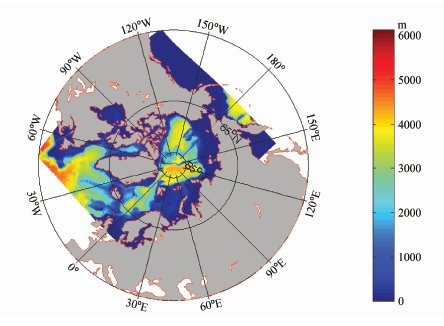 This month we shine light on recently published work by a team of Chinese investigators who have been using MITgcm to study Arctic sea ice.
Modeling Nordic Seas II
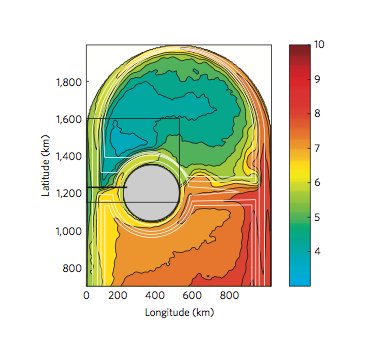 Mike Spall, a Senior Scientist in the Physical Oceanography Group at the Woods Hole Oceanographic Institution, has been using MITgcm to understand newly observed characteristics of the Denmark Strait Overflow.